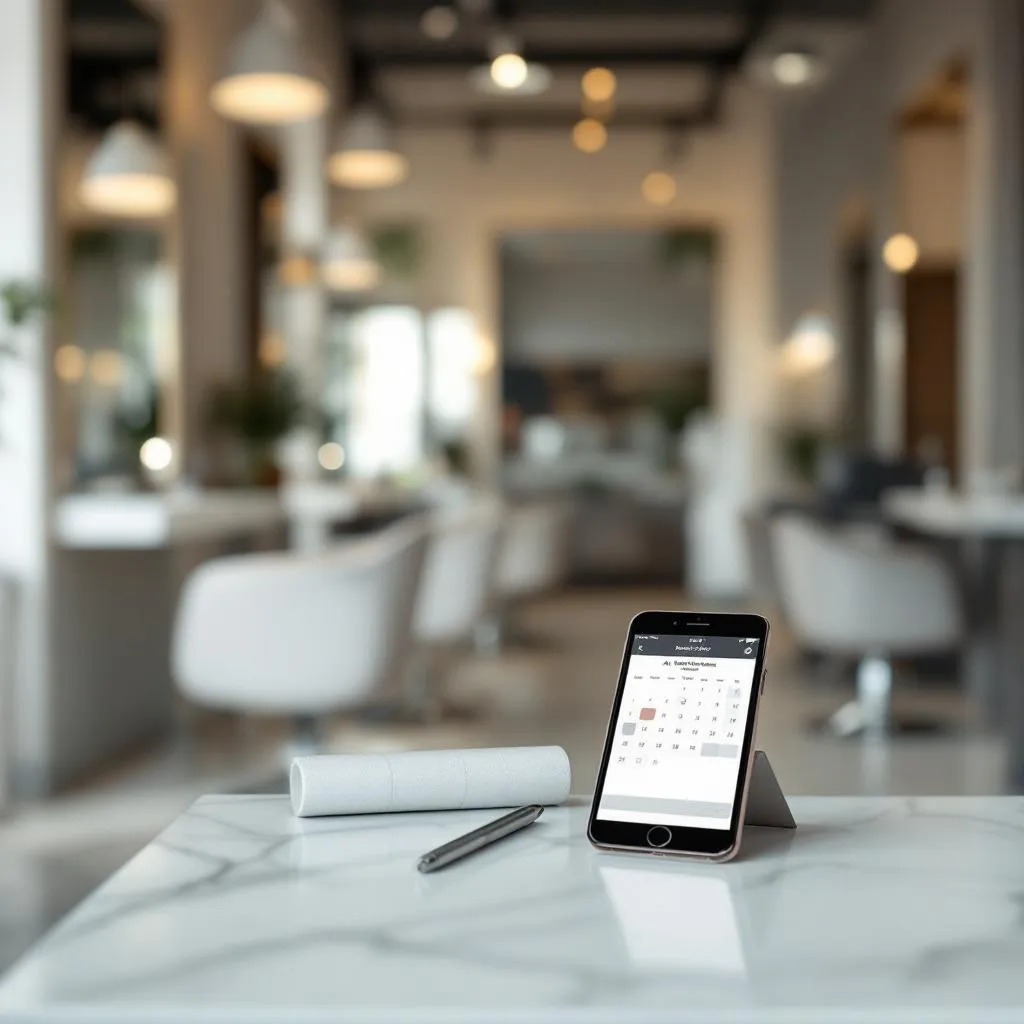
Every salon owner knows the feeling. You arrive on a busy Saturday, the schedule looks full, and then — one by one — three clients simply do not appear. No message, no cancellation, no explanation. The chair sits empty, the stylist stands around, and you have already turned away someone who actually wanted that slot.
No-shows are not a small annoyance. On a fully booked Saturday with an average appointment value of £50, three no-shows is £150 of revenue that never arrives. Across a month, that compounds into a meaningful gap in your income — and into growing frustration for your team.
Learning how to reduce salon no-shows is one of the highest-impact changes you can make for your bottom line. Most salon owners assume no-shows are inevitable — a cost of doing business. They are not. With the right combination of automated reminders, booking policies, waitlist management, and loyalty incentives, salons routinely bring their no-show rate from 20% down below 5%. Here are seven strategies that make that possible.
The Real Cost of No-Shows in 2026: What the Numbers Say
Before fixing the problem, it helps to see it clearly. Industry research consistently shows that salon no-show rates range from 15% to 30% for salons without active prevention systems. That number is not evenly distributed — salons that rely on WhatsApp and phone bookings sit at the higher end; those with automated reminders and online booking tend to be below 8%.
What does a 20% no-show rate actually cost? Consider a salon with 25 appointments per day, an average ticket of £55, and five working days per week:
- 5 missed appointments per day × £55 = £275 in lost revenue daily
- Across a working month (22 days): £6,050 gone
- Across a year: over £72,000 in missed income
Even at a conservative 10% no-show rate, the annual loss for most salons runs into tens of thousands of pounds. And that ignores the secondary cost: stylists standing idle, the mental toll on staff morale, and the opportunity cost of turning away clients who would have kept their appointments.
Communication channel makes a measurable difference too. SMS messages have open rates above 95%, compared to around 20% for email. That gap matters for appointment reminders: an SMS sent 24 hours before an appointment is seen almost immediately, while an email may sit unread until after the slot has passed. Using both channels ensures your reminder reaches clients however they consume information — and salons using dual-channel reminders typically see no-show rates 40–50% lower than those using email alone.
The good news: meaningful no-show reduction — 70–80% fewer missed appointments — is achievable with the right systems in place, without confronting clients or adding punitive fees.
Why No-Shows Happen (And Why It Is Not Your Clients' Fault)
Most no-shows fall into three categories:
- Forgetting. Life is busy. Without a reminder, appointments booked two or three weeks ago simply slip out of memory. This accounts for the majority of no-shows.
- Low psychological commitment. Informal bookings — by WhatsApp, DM, or phone call — feel disposable. There is no confirmation email, no reference number, no cancellation link. The booking exists only in a chat thread or in someone's head. That makes it easy to mentally cancel without bothering to tell you.
- No friction to cancel properly. If cancelling requires sending a message and potentially having a conversation, some clients will avoid it entirely. They say nothing and just do not show up.
Notice that none of these causes are about client character. They are about system design. Which means fixing them is about designing better systems — not about confronting clients or adding fees as punishment.
Strategy 1: Automated Email Appointment Reminders
The single highest-impact change you can make is sending automatic reminders before every appointment — by email. Not manually, but triggered automatically by your booking system the moment a client books.
The ideal reminder sequence is:
- 48 hours before — email with the appointment details, stylist name, location, and a link to reschedule or cancel
- 24 hours before — a follow-up email with the key details in short form: time, name, and a link to confirm or cancel
SMS reminders outperform email for last-minute reach because they are opened within minutes, not hours. For clients who may not check their inbox regularly, an SMS at 9am the morning of an appointment often makes the difference between them showing up and simply forgetting.
In DoTheBeauty, setting up automatic appointment reminders takes about 10 minutes. Once configured, email sequences run without any manual input. Salons that use this consistently report no-show rates dropping from 15–20% to under 5%.
The reminder does two things simultaneously: it jogs memory for clients who forgot, and it creates a moment for clients who can no longer make it to cancel — rather than quietly not showing up. That last part matters. When clients have a frictionless way to cancel, they do — giving you time to fill the slot.
Email reminder templates you can use today
Here are two copy-ready templates that work well in practice. Paste them into your booking software and adjust the fields to match your salon's voice:
SMS reminder (send 24 hours before):
[Salon Name]: Hi [First Name] — your [Service] is tomorrow at [Time] with [Stylist]. Address: [Full Address]. Cancel or reschedule: [link] Reply STOP to opt out.
Email reminder (send 48 hours before):
Subject: Your [Service] appointment at [Salon Name] — [Day], [Date]
Hi [First Name],
Your appointment is coming up:
- [Day], [Date] at [Time]
- [Service] with [Stylist]
- [Salon Name], [Full Address]
Need to reschedule or cancel? Please do so at least 24 hours in advance so we can offer the slot to someone on the waitlist: [booking link]
See you soon,
[Salon Name]
The email template works because it answers the three questions clients actually need: when, what, and where. The cancel link removes the social friction of having to send a message — and clients who cancel give you time to fill the gap.
Strategy 2: Deposit and Prepayment Policies
Deposits create financial commitment. A client who has paid £20 to secure a colour appointment is far less likely to silently not appear than one who booked for free over WhatsApp.
The key is applying deposits selectively. For a quick trim or a brow tidy, deposits feel bureaucratic and may put people off. For a full colour, a keratin treatment, or any appointment over 90 minutes, a small deposit is entirely reasonable — and most clients accept it without complaint when it is framed clearly at the time of booking.
Set deposits at 20–30% of the service value. Make the cancellation policy explicit: full refund if cancelled 48+ hours in advance, deposit forfeited otherwise. This is not punitive — it is how every hotel and restaurant works. Clients understand it. For a clear template to use, see the salon cancellation policy guide.
Prepayment for new clients is worth considering as a separate policy. New clients with no booking history at your salon represent the highest no-show risk. Requiring full or partial prepayment for a first appointment — framed as standard practice — removes that risk without alienating existing loyal clients. With Stripe Connect built into DoTheBeauty, you can collect card payments directly through your booking page with no third-party tool needed.
Cancellation policy template (copy and paste)
Use this text on your booking page, in confirmation emails, and anywhere clients agree to your terms before booking:
Cancellation & No-Show Policy
We kindly ask for at least 48 hours' notice to cancel or reschedule an appointment. Cancellations made more than 48 hours in advance will receive a full deposit refund. Cancellations within 48 hours, or on the day of the appointment, will forfeit the deposit. Clients who do not attend without notice will be charged the full deposit amount.
To cancel or reschedule, use the link in your booking confirmation email or contact us at [phone/email].
By completing your booking, you agree to this policy.
Adjust the notice window to your salon's workflow — 24 hours works for most services; 48 hours is better for long appointments where last-minute slot recovery is difficult. The most important thing is that the policy is visible before the booking is confirmed, not introduced after a no-show.
One real-world example: Bonnie Reid moved her entire salon booking flow online in under 10 minutes. Within the first month, having auto-confirmations and a clearly visible cancellation policy in place cut her no-show rate substantially — before she even needed to enforce the deposit policy. A visible policy changes behaviour before anyone is charged.
Strategy 3: Waitlist Systems for Last-Minute Cancellations
No-shows happen. Even with reminders and deposits, some appointments will still be lost. A waitlist means those slots do not stay empty.
When a cancellation comes in — whether from a client or because someone simply did not appear — the system can automatically notify the first person on the waitlist. If they confirm, the slot is filled. If not, it moves to the next person.
Active waitlist management fills 40–60% of last-minute cancellations. That is revenue that would otherwise be lost entirely. The key is notifying waitlisted clients immediately — within minutes, not hours — so they have time to rearrange their day. This requires a booking system with built-in waitlist functionality. Manually managing a waitlist in a notebook or notes app is too slow to be effective in practice.
Strategy 4: Online Booking with Automatic Confirmations
Online bookings create a paper trail that phone and WhatsApp bookings do not. When a client books online, they immediately receive a confirmation email with the appointment details, a stylist name, and a link to cancel or reschedule.
This confirmation does something subtle but important: it makes the booking feel real and official. There is a reference number. There is a record. Clients treat confirmed digital bookings differently to informal arrangements.
Moving your bookings online also means you stop relying on memory and handwritten notes — which means fewer double-bookings and scheduling errors on your side, too. If you are still taking most bookings by phone or WhatsApp, switching to an independent booking system is worth considering — particularly one where you keep 100% of every booking without marketplace commissions.
Strategy 5: Same-Day Booking to Recover Cancelled Slots
One underused strategy for no-show reduction is enabling same-day online booking. Many salons disable last-minute booking out of concern for logistics — but if you already have an empty slot because of a no-show or cancellation, that concern does not apply.
When you allow clients to book the same day (within a configurable advance notice window — even 30 or 60 minutes), you capture impulse bookings from people who happen to be free that afternoon. These are clients you would never have reached otherwise. In urban and suburban areas, same-day bookings can fill 20–30% of last-minute gaps.
In DoTheBeauty, you can configure your minimum advance booking window per service or per stylist. Setting a more permissive window for certain slots — or opening same-day booking on quieter days — is a practical way to turn a no-show problem into an opportunity to serve a new client.
Strategy 6: Track No-Shows and Apply No-Show Reduction Policies
Not all no-shows are equal. Some clients forget once and are mortified. Others are habitual — they book impulsively, intend to come, and regularly cancel at the last moment or not at all.
With a CRM-linked booking system, you can see a client's history before confirming their next appointment. If someone has no-showed twice in three months, you have a decision to make: require a deposit for their next booking, or politely let them know your cancellation policy applies.
Most clients with a history of no-shows respond well to a simple, friendly message: "We have kept a spot for you — as a reminder, we do ask for a deposit on bookings over 90 minutes." That is not confrontational. It is professional.
Salon no-show policy template
If you do not yet have a written no-show policy, here is a template you can adapt and paste into your booking confirmation emails and booking page:
No-Show Policy
Clients who do not attend their appointment without prior notice will be charged [50–100%] of the booked service value. A deposit of [20–30%] is required for appointments over 90 minutes or for first-time clients — this deposit is forfeited if the appointment is missed without 48 hours' notice.
We understand emergencies happen. If you need to cancel, please use the link in your confirmation email at least 48 hours before your appointment so we can offer the slot to another client.
By completing your booking, you agree to this policy.
The key is visibility: a client who sees this policy before they book is far less likely to dispute a charge — and far more likely to cancel properly rather than simply not appearing. Keep the policy short, friendly, and present at every booking touchpoint — confirmation email, booking page, and appointment reminders.
Tracking also helps you spot patterns: are no-shows concentrated on Monday mornings? Are they more common with certain service types? That information can inform how you schedule and how aggressively you fill your waitlist on certain days.
How to Enforce No-Show Fees Without Losing Clients
No-show fees — charging clients who miss appointments without cancelling in advance — are a legitimate protection for your time and income. But how you enforce them matters as much as having them. Handled badly, they create disputes and lost clients. Handled well, they are rarely contested at all.
The salons that enforce no-show fees successfully share a few practices:
- State the policy before the appointment, not after. Include your fee policy in the booking confirmation and on your booking page. Clients who know the policy in advance rarely dispute it. Clients surprised by a charge after a no-show often do — even if the policy is technically justified. Visibility before the fact is the single biggest factor in dispute prevention.
- Use deposits to make the fee automatic. The cleanest way to enforce a no-show charge is to collect a deposit upfront. If the client attends, the deposit applies toward their bill. If they no-show, you already hold the funds. There is no awkward post-appointment invoice, no chasing. The deposit system makes enforcement frictionless — for you and for the client.
- Keep the fee proportional. A no-show fee of £15 on a £20 brow tidy feels punitive. A £25 deposit on a £150 colour treatment feels fair. Fees set at 20–30% of the service price sit in a range most clients consider reasonable — and proportional fees hold up far better if a client pushes back.
- Waive once for long-standing clients with a clean record. If a reliable client of two or three years misses an appointment for the first time and explains the situation, waiving the fee and noting it in their record is good relationship management. They will remember the grace. Enforce normally if it happens again — and the note in their record means you will know the history.
- Handle disputes by phone, not message. If a client disputes a no-show charge, a phone call resolves it better than a text or email thread. Most disputes arise from misunderstanding, not bad intent. A brief conversation to explain the policy — and genuinely listen to their side — typically resolves things and preserves the relationship better than written back-and-forth ever does.
No-show fees work best as the backstop in a layered system — not the front line. When reminders, deposits, and waitlists are already in place, most clients simply show up. The fee policy ensures that the ones who do not still cost you as little as possible. Think of it as the insurance layer: you hope not to need it, but you are glad it is there.
Strategy 7: Loyalty Incentives That Reward Reliability
Prevention is not only about deterrents — it is also about positive reinforcement. Clients who feel valued are significantly more likely to honour their appointments and, when they need to cancel, to do so properly rather than simply not showing up.
Loyalty incentives work alongside your reminder and deposit systems to create a culture of commitment in your salon. A few practical examples:
- Reliability reward. After a client attends five consecutive appointments without a no-show or late cancellation, offer a small perk — 10% off their next service, a complimentary treatment, or early access to new appointment slots. This is worth more than it costs: a reliable client is worth far more long-term than the discount you give them.
- Rebooking incentives. Encourage clients to rebook at the end of their appointment with a minor discount or priority booking window. Clients who are already in your chair and emotionally satisfied are the easiest to retain. A confirmed next appointment removes the possibility of a late, impulsive no-show — because the booking happens in a high-commitment moment.
- Cancellation grace for loyal clients. Long-standing clients sometimes have genuine emergencies. Having a clear internal policy that waives the deposit penalty for clients with an otherwise clean history — once — creates goodwill without encouraging abuse. Log it, and treat a second occurrence normally.
Client retention and no-show prevention overlap significantly. The same systems that reduce no-shows — online booking, reminders, CRM tracking — also support long-term salon client retention. Treating them as one programme rather than two separate problems leads to better outcomes on both.
Looking for more ways to keep your chair full? Our guide to salon marketing ideas covers referral programmes, local partnerships, and seasonal promotions that reduce gaps in your diary.
How to Reduce Salon No-Shows: What a Low-No-Show Salon Looks Like
The salons that consistently keep no-show rates below 5% are not doing anything magical. They have:
- Online booking with instant confirmation emails
- Automatic email reminders at 48 hours before each appointment
- Deposits on bookings over a certain value or duration
- Prepayment for new clients to eliminate first-time no-show risk
- An active waitlist that fills cancellations automatically
- Same-day booking enabled to capture last-minute demand
- A system that tracks no-show history per client
- Loyalty incentives that reward clients who show up consistently
You do not need to implement all seven strategies at once. If you are starting from zero, begin with automated email reminders — that alone will significantly cut your no-show rate. Add deposits for long services next. Build from there.
All of these tools are available in DoTheBeauty at no extra cost beyond the standard subscription. If you are currently managing reminders manually or taking bookings over WhatsApp, the gap in no-show rates between your current setup and a modern booking system is substantial.
Want to know how to get more bookings online while simultaneously reducing the ones that don't show up? That combination — more bookings, fewer gaps — is what a properly configured booking system delivers.
Frequently Asked Questions About Salon No-Shows
What is a good no-show rate for a salon?
An informal booking system (WhatsApp, phone) typically produces no-show rates of 15–30%. With automated reminders and online booking, most salons reach 5–8%. With a deposit policy on top, rates often fall below 3%. A realistic target for most salons is under 7%.
What is the fastest way to reduce salon no-shows?
Automated email appointment reminders are the fastest, highest-impact change. Most salons see no-show rates drop from 15–20% to under 8% within the first month. An email at 48 hours gives clients time to reschedule; a follow-up at 24 hours is the most effective combination.
How do I reduce no-shows without upsetting clients?
Frame every policy around service and convenience, not punishment. Reminders help clients remember. Deposits protect your team's time but offer easy refunds for timely cancellations. Waitlists benefit other clients who want that slot. When policies are explained clearly at booking — not after a no-show — most clients accept them without friction.
Should I charge a deposit for every appointment?
Not necessarily. Many salons charge deposits only for new clients, long services (over 90 minutes), or clients with a history of no-shows. Starting with a deposit policy for new clients is low friction and catches the highest-risk group without affecting loyal regulars.
How far in advance should I send appointment reminders?
Send email at 48 hours before the appointment — this gives clients time to rearrange and cancel properly if needed. A follow-up email at 24 hours further reduces risk for long or high-value appointments.
Can I block repeat no-shows from booking again?
In principle, yes. Tracking no-shows per client lets you identify repeat offenders and either require a deposit before they can book again, or decline their bookings altogether. Most salon owners prefer the deposit route — it protects your schedule while keeping the client relationship intact.
Do salon waitlists actually work?
Yes — if you have one set up in your booking system and clients are notified immediately when a slot opens. Without a waitlist, a cancellation means an empty chair. With one, you can fill 40–60% of last-minute cancellations. The key is speed: notify waitlisted clients within minutes, not hours, so they have time to rearrange their day.
What should a salon no-show policy template include?
A salon no-show policy should cover: the notice window required to cancel (typically 24–48 hours), the deposit amount and when it is forfeited, the no-show fee (usually 50–100% of the service value), and how the policy is communicated at booking. Visibility before the appointment — not after a no-show — is what makes the policy enforceable without disputes. The deposit and cancellation policy section above includes a copy-and-paste template you can use today.
What is a good salon cancellation policy?
A good salon cancellation policy has three elements: a notice window (24–48 hours), a consequence for late cancellations or no-shows (deposit forfeited or a flat no-show fee), and a communication point — clients must see the policy before they book, not after they miss an appointment. Frame it around your team's time, not punishment. Salons that display the policy clearly at the booking stage see significantly fewer disputes when they need to enforce it.
Start a free 7-day trial and see what automated no-show prevention looks like in practice.
Frequently Asked Questions

DoTheBeauty Team
Salon Software Experts
Our team consists of salon owners, beauty professionals and software engineers who share their knowledge to help you build a better salon business.